
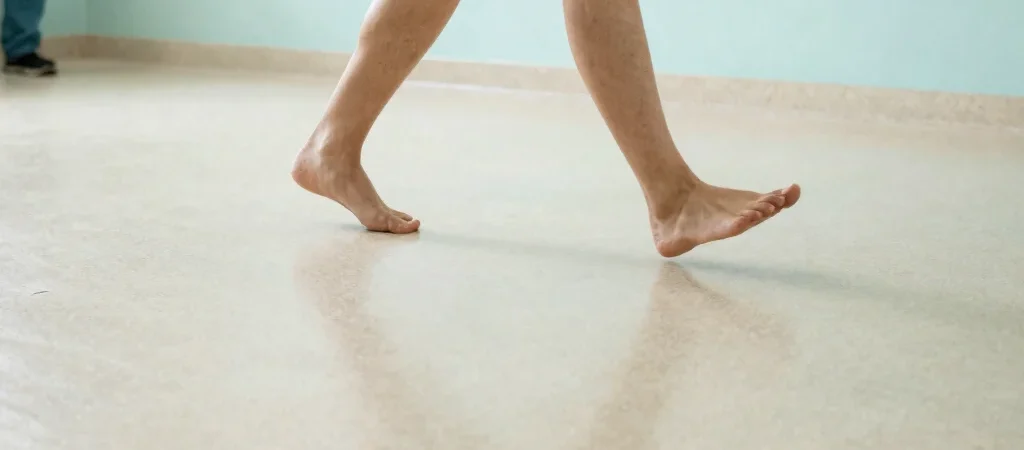
Watch someone walk from one side of a room to the other and notice how one foot supports the body while the other travels forward. Gait analysis gives these parts of the walking cycle names: stance and swing. They are a helpful starting point for organizing observations, not a diagnosis by themselves.
When the foot supports weight
Stance begins when the foot contacts the ground and continues while that limb supports the body, ending as the foot leaves the surface. During this time, the leg accepts load and helps move the body forward. The exact pattern changes with walking speed, footwear, the surface, and the person’s movement strategy.
When the leg advances
Swing starts after the foot leaves the ground and lasts until that foot contacts the ground again. The limb advances, while the hip, knee, and ankle coordinate to let the foot clear the floor and prepare for the next step. A shorter or altered swing can have several explanations, so the observation needs to be considered alongside the rest of the gait cycle.
Describe before interpreting
A useful gait note separates what is visible from what might explain it. For example, “the right step appears shorter” describes an observation; it does not establish its cause. Compare both sides, notice the person’s speed and comfort, and connect the pattern to the activity or question that prompted the assessment.